Stuck in the Middle: Surviving the Long, Invisible Middle of an Artist's Life
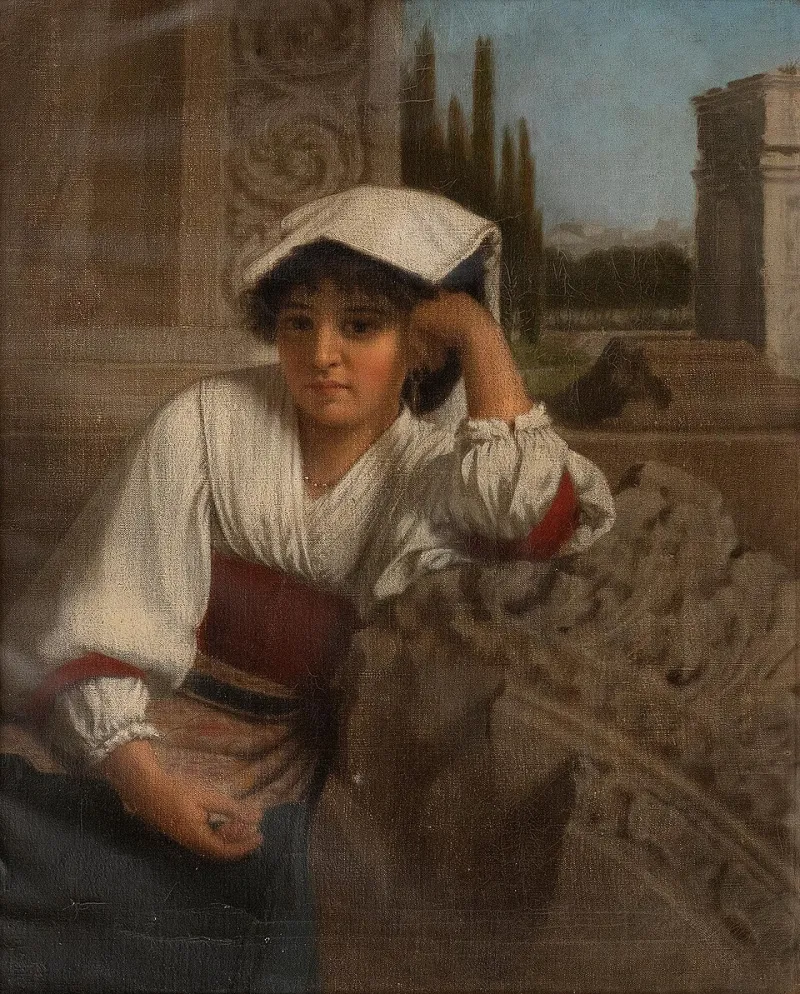
Photo: John Frederick Lewis, Public domain, via Wikimedia Commons
The beginning is easy to romanticize. You're new, you're hungry, everything is discovery. People use the word emerging about you and it feels like a promise. There's momentum in just starting, a particular electricity that comes with having nothing yet to lose.
And then there's the other end — the established artist, the one with the retrospective and the stable income and the audience that shows up reliably. That version of yourself exists somewhere, you're pretty sure.
But right now you're somewhere in the middle. And the middle, nobody told you, is the longest part.
What the Middle Actually Feels Like
You've been doing this long enough that you can't claim beginner's grace anymore. People expect something from you now. You have some audience, some body of work, some evidence that this is real. But you're not yet at the place where the work sustains itself — financially, emotionally, in terms of cultural visibility.
The validation is inconsistent. A piece lands and you feel, briefly, like you know what you're doing. Then two more pieces go mostly unnoticed and the doubt floods back in. You start doing the comparison math obsessively — who started around the same time as you, where are they now, what are they doing differently. You know this math is useless. You do it anyway.
The question that starts to haunt you isn't can I do this — you've already answered that, more or less. The question becomes something more disorienting: am I doing this right?
The Specific Cruelty of Inconsistent Momentum
There's a particular psychological toll that comes with intermittent validation. It's actually worse, in some ways, than consistent rejection — because it keeps you invested. You get just enough signal that the work matters to keep going, but not enough to feel secure in the direction.
This is the phase where a lot of artists quietly drift. Not dramatically. They don't announce they're quitting. They just start saying yes to things that don't serve the work because they need the money or the visibility or the reassurance. They start making safer choices. They spend more time on the presentation of making art than on the actual making of it.
None of this is shameful — it's almost universal. The middle is exhausting in a way that's hard to explain to people outside it, partly because from the outside it can look like things are going fine.
The Comparison Spiral and How to Step Off It
Here's the thing about the artists you're comparing yourself to: you're almost always comparing your internal experience to their external presentation. You see their wins, their press, their confident posts. You don't see the three years they spent in the exact same fog you're in right now.
The middle is largely invisible. Artists don't document it honestly while they're in it — partly because it's painful, partly because the cultural narrative around creative careers skips straight from scrappy beginnings to hard-won success. The messy, stalled, uncertain middle doesn't make for a clean story.
But it makes for the most common one. Most working artists spend more time in this phase than in any other. Which means the thing you're feeling right now — the groundlessness, the inconsistency, the quiet question of whether you're on the right track — is not evidence that something has gone wrong. It's evidence that you're in it for real.
What Actually Helps
A few things are genuinely useful here, and they're not the things people usually say.
Shrink the frame. When the big picture feels paralyzing — career, trajectory, legacy, all of it — it can help to make the window smaller. Not where is this going but what am I making right now, this week, this month. Not what does my career look like but what does the next piece need from me. The middle requires a kind of deliberate myopia.
Find your contemporaries, not your aspirations. Mentors and established artists are valuable, but they're not the people you need most right now. You need the people who are in the same fog. The ones who understand the specific texture of this phase — who you can be honest with about the doubt without it feeling like failure. Those relationships are sustaining in a way that admiration rarely is.
Let your definition of progress loosen. In the beginning, progress is obvious — first show, first release, first sale. In the middle, it gets quieter. Progress might be a piece that finally does what you've been trying to do for two years. It might be a conversation with someone who tells you your work changed something for them. It might be just the fact that you're still here, still making, when the path gave you plenty of reasons to stop.
Get suspicious of the urgency. There's a cultural pressure — especially in the US, where hustle is practically a religion — to be accelerating at all times. To be growing, scaling, building. But some of the most important creative development happens in periods that look, from the outside, like stagnation. The middle often is the work, even when it doesn't feel that way.
The Thing Nobody Says About This Phase
You don't graduate from the middle by finally doing something right. You don't wake up one day and cross a threshold into established. What actually happens — for most artists — is that the middle gradually gets more navigable. The doubt doesn't disappear, but you get better at moving through it. The inconsistent validation stops feeling like a verdict.
And the work, if you keep making it, keeps accumulating. Not always visibly. Not always on the timeline you wanted. But it accumulates into something that starts to feel like a body of work, a voice, a thing that couldn't have been made by anyone else.
That's not a small thing. That's actually the whole thing.
The middle is where most of it happens. You're not stuck. You're in it.