Making Art for a Room That Hasn't Filled Yet
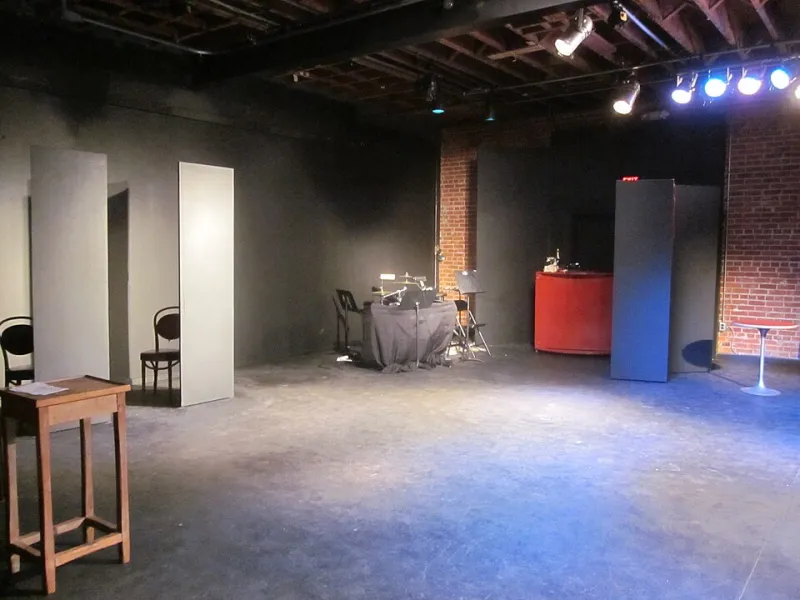
Photo: Infrogmation of New Orleans, CC BY-SA 3.0, via Wikimedia Commons
There's a particular kind of loneliness that doesn't get talked about enough in creative circles. It's not the loneliness of being misunderstood, exactly. It's something more specific — the feeling of having made something real, something alive, and then releasing it into a silence so complete it starts to feel like the work never existed at all.
Most artists know this silence intimately. And yet, somehow, they keep making things.
The question worth sitting with isn't why they keep going — survival instinct, compulsion, love, take your pick. The more interesting question is how. How do you stay honest in your work when there's no feedback loop? How do you resist the slow drift toward making things that might finally get noticed, rather than things that are genuinely yours?
The Invented Listener
There's an old trick that writers talk about, though it applies equally well to visual artists, musicians, filmmakers, and anyone else who makes things for an audience they can't yet see: you invent one person.
Not a demographic. Not an algorithm. One specific, imagined human being who would get it — who would sit with your work, feel the thing you were trying to make them feel, and walk away changed in some small, private way.
This invented person isn't a fantasy of fame. They're more like a creative collaborator who exists entirely in your head. Some artists describe them as a version of their younger self — the kid who desperately needed this exact piece of art and couldn't find it anywhere. Others imagine a stranger: someone on a train, in a city they've never visited, who stumbles onto their work at 2am and feels, for the first time in weeks, a little less alone.
The specificity matters. A vague imagined audience is just ego in disguise — you're really just picturing a crowd cheering. But a single, detailed, fully-realized imaginary viewer forces you into a kind of radical empathy. You have to think about what they actually need, not what would make them applaud.
The Risk of Chasing Ghosts
Here's where it gets complicated, though. Because there's a version of this practice that curdles into something unhealthy.
When the imagined audience becomes too fixed — when you start making decisions based on what they would want rather than what the work demands — you've stopped creating and started performing for a hallucination. You're no longer making art. You're making a pitch to a person who doesn't exist yet, based on assumptions you've never had to test.
This is the phantom audience at its most dangerous: a mirror that only reflects what you want to see, dressed up as artistic intention.
The artists who navigate this tension most gracefully tend to hold their imagined viewer loosely. They use them as a compass, not a destination. The invented listener helps them stay honest about feeling — is this landing? does this actually do something? — without dictating every choice. When the work starts pulling in a direction the imagined viewer wouldn't follow, the best artists follow the work.
Obscurity as a Kind of Freedom
Something nobody tells you when you're starting out: obscurity has real advantages, and they don't last forever.
When nobody's watching, you can fail without consequence. You can make the weird thing, the too-long thing, the thing that doesn't fit any existing category. You can experiment with forms that might embarrass you if they didn't work. The absence of an audience is genuinely painful, but it's also a protected space — one that many artists, once they've found their footing and their following, look back on with something close to grief.
The musicians who spent years playing to half-empty bars in cities that didn't care often describe those shows as formative in a way that sold-out venues never quite replicate. The visual artists whose early work collected dust in storage describe a freedom in those years — a permission to follow strange instincts without anyone trying to market them.
This doesn't mean obscurity is good, or that struggle is romantic. It means the time before the audience arrives isn't wasted time. It's the time when the work gets made.
Staying Authentic When the Silence Stretches
The psychological weight of making work that isn't reaching anyone yet is real, and it's worth taking seriously. Motivation research consistently shows that humans need some form of feedback to sustain effort — which creates a genuine problem for artists working in obscurity, where feedback is either absent or, worse, actively discouraging.
Some strategies that actually seem to help:
Build a micro-audience intentionally. Not thousands of followers — one, two, five people whose responses you trust. A friend who reads everything you write and tells you the truth. A collaborator who sees your work before anyone else. This isn't about validation. It's about maintaining a connection between your work and actual human response, even at the smallest scale.
Separate the making from the releasing. Many artists find it useful to create a psychological buffer between the act of making something and the act of putting it into the world. The work exists fully before it has an audience. Its value isn't contingent on reception. This sounds like a platitude until you actually practice it — and then it starts to feel like a lifeline.
Document the process, not just the product. When the finished work disappears into silence, the record of making it is still yours. Journals, sketches, notes, voice memos — these create a personal archive of the work's existence that isn't dependent on anyone else's attention. The work happened. You were there.
When the Room Finally Fills
Here's the thing about the phantom audience: sometimes they show up.
Not always on the timeline you wanted, or in the numbers you imagined, or in the form you expected. But the artists who kept making specific, honest work for their imagined single viewer often find, eventually, that the real version of that viewer exists — and that they brought others with them.
This is the quiet miracle at the heart of the whole thing. The work you made in obscurity, for a person you invented, turns out to have been exactly what a real person somewhere needed. The specificity that felt like a liability — too niche, too strange, too personal — becomes the very thing that makes someone feel found.
The room fills slowly, and then all at once, and then you're making work for an audience that's real and watching and responding. And if you're lucky, and if you held onto the practice, you still make it for the one imagined person who needed it most. You just know now that they're out there somewhere, waiting.