The Smaller the Gate, the Truer the Crowd: What Constraint Does to Community
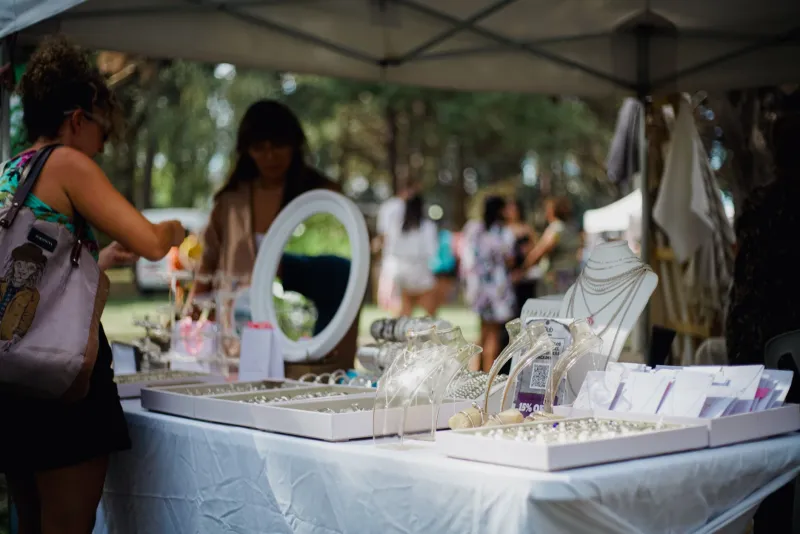
There's a cartoonist in Portland who draws exclusively in a single color of ink — a particular shade of dusty terracotta — and refuses to publish anywhere except a self-printed zine she sells at one farmers market per month. Her waiting list is longer than some mid-size publishers' subscriber counts. People plan road trips around that market. They bring friends. They send her letters, actual paper letters, describing what her work means to them.
She didn't build that by opening up. She built it by closing down.
The Myth of Maximum Reach
We've been sold a story about how creative success works: the wider you cast, the more you catch. Post everywhere. Make it accessible. Sand down the edges so nobody gets scratched. The logic sounds reasonable until you notice how many artists who follow it end up feeling weirdly invisible — technically present across every platform, genuinely felt by almost no one.
Constraint works differently. When an artist limits the materials they'll use, the geography they'll work within, the format they'll publish in, or the themes they'll touch, something counterintuitive happens. The work starts to feel authored in a way that polished, optimized content rarely does. It has a fingerprint. And fingerprints, it turns out, are exactly what certain people are looking for.
They're not looking for everything. They're looking for the thing that fits the specific shape of their own interior life.
What a Limitation Actually Signals
When an artist commits to a constraint — really commits, not as a gimmick but as a genuine operating principle — it communicates something that no amount of branding work can fake: I made a choice, and I'm living inside it.
That's rarer than it sounds. Most creative work, especially in the age of algorithmic pressure, is shaped by what the platform rewards. An artist who ignores that and builds their own set of rules is essentially saying: I trust the work more than I trust the metrics. And for a certain kind of audience — people who have spent years feeling like everything is made for someone slightly unlike them — that posture is magnetic.
A musician who records only on cassette tape in her Chicago apartment isn't just making an aesthetic choice. She's filtering. Everyone who finds their way to her music has already passed through a small but significant gate: they had to want it enough to seek it out, to tolerate the warmth and hiss of the format, to understand why that warmth and hiss matter. By the time they arrive, they're already halfway home.
The People Who Stay
Communities built around constrained work tend to have a particular quality. They're less like fandoms and more like neighborhoods — smaller, slower, and strangely loyal. The people inside them talk to each other differently than fans of more mainstream work. There's less performance of enthusiasm and more actual conversation. They compare notes. They argue about meaning. They bring their own interpretations and find that the work holds them.
That's not accidental. Constraint tends to produce work with genuine density — things that reward repeated attention because they weren't designed to be consumed and discarded. A painter who works only in egg tempera, a filmmaker who shoots exclusively on expired 16mm, a poet who writes only about a single square mile of rural Mississippi — these artists aren't limiting their audiences. They're selecting for a particular quality of attention.
And people who pay that kind of attention tend to stick around.
The Geography of No
Some of the most interesting constraints are geographic. There's a whole ecosystem of regional artists in the US — in places like Appalachia, the Texas Hill Country, the rural Pacific Northwest — who have built devoted followings precisely by refusing to universalize their work. They write about specific creeks, specific light at specific times of year, specific ways of talking that don't translate cleanly outside their home counties.
People in those places feel, sometimes for the first time, that someone made something for them. Not a romanticized version of where they're from, packaged for an outside gaze, but the actual texture of the life they're living. And people outside those places often find themselves unexpectedly moved — not because the work has been made generic enough to travel, but because specificity, real specificity, has a way of cracking something open in whoever encounters it.
You don't have to be from the Mississippi Delta to feel what the Delta blues are doing. But you have to be willing to follow the work somewhere it wasn't designed to take you.
Saying No as a Creative Act
It helps to think of constraint not as deprivation but as declaration. Every no is also a yes to something more specific. The artist who won't work in color is saying yes to every emotional register that only lives in shadow and light. The writer who won't leave her hometown is saying yes to the depth that only comes from staying long enough to really see.
That kind of declaration draws people. Not everyone — and that's the point. It draws the ones who recognize something true in the declaration, who feel the yes underneath the no, who have been waiting for someone to be that specific about something they'd only ever felt vaguely.
Those aren't casual followers. They're the people who will show up at the farmers market three months in a row. Who will track down the cassette. Who will write the paper letter.
The Crowd You Couldn't Have Planned
Here's what's almost funny about all of this: the artists who build these devoted communities almost never set out to build them. They set out to honor the constraint. The community was a side effect of the honesty.
You can't reverse-engineer it. You can't decide to be constrainted as a strategy for finding your people, because the constraint has to be real — rooted in something you actually believe about how work should be made, not something you've adopted because you read that specificity builds audiences.
But if you have a genuine limitation — something you actually won't do, a line you actually won't cross, a format or geography or set of materials you're actually committed to — it might be worth leaning into it rather than apologizing for it.
Somewhere out there, there's a small crowd of people who will feel, when they find your work, like they've been waiting for exactly this. They just need the gate to be small enough that they know they're in the right place when they walk through it.