What Happens to Your Art When the Room Goes Quiet
The Work That Only Exists When Someone's Looking
There's a particular kind of creative paralysis that nobody really talks about — not the fear of starting, not the fear of failure, but the strange, creeping stillness that sets in when the pressure lifts. When the show closes. When the project wraps. When the comments slow down and the inbox quiets and you're left alone with a blank canvas or an open document and absolutely nothing driving you toward it.
For a lot of artists, that's when the work stops.
Not because they've run out of ideas. Not because they're burned out in any conventional sense. But because somewhere along the way, the act of creating got fused with the act of being seen. And without an audience — even an imagined one — the whole thing loses its gravity.
It's worth sitting with how strange that is. You made something. It connected. People responded. And then the moment you're left alone with the raw materials again, you freeze. The person who could make that thing seems to have walked out of the room with the crowd.
The Validation Loop and How It Gets Wired In
This isn't a character flaw. It's closer to a conditioning response, and it makes a lot of sense when you trace it back.
Most of us learned to make things in environments that rewarded output. School performances. Art class critiques. Social media. Even the casual approval of a friend who said oh, that's really good at exactly the right moment. The feedback loop gets established early: you make something, someone responds, the making feels worthwhile. Over time, your nervous system starts treating the response as part of the creative act itself — not a bonus, but a necessary ingredient.
Take the response away, and the whole recipe feels incomplete.
The psychologist Mihaly Csikszentmihalyi spent decades studying what he called "flow" — that state of deep, almost effortless absorption in a task. One of his core findings was that intrinsic motivation (doing something because the doing itself is satisfying) produces more sustained creative output than extrinsic motivation (doing something for reward or recognition). But here's the catch: if you've been operating on extrinsic fuel for long enough, intrinsic motivation can feel almost foreign. Quieter. Less urgent. Easy to ignore.
So you sit down to make something with no deadline, no audience, no stakes — and it just feels kind of pointless. Not because it is, but because your system has been trained to interpret that silence as a signal that the work doesn't matter.
Solitude Versus Isolation — They're Not the Same Thing
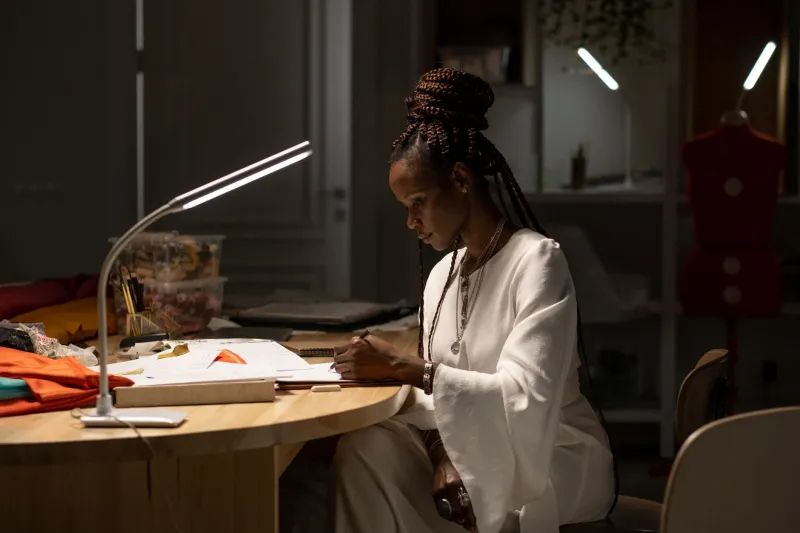
There's a version of working alone that's generative. Artists have always needed it — the long stretches of uninterrupted time where something genuinely new can surface. Georgia O'Keeffe in the New Mexico desert. Bill Callahan writing songs in a rented room. The studio hours that never make it into any interview because they're too quiet, too unglamorous, too much like just showing up and doing the thing.
That's solitude. It has a quality of intention to it. You're alone with something — with the work, with the questions the work is asking.
Isolation feels different. It's solitude that's curdled. You're alone from something — from feedback, from connection, from the sense that any of this is going anywhere. The physical circumstances might look identical, but the interior experience is completely different. One feels like depth. The other feels like disappearing.
Learning to tell them apart is one of the more underrated skills in a creative life. And it starts with being honest about what you're actually reaching for when you sit down to make something.
Curiosity as a Different Kind of Engine
Here's a reframe that some artists find genuinely useful: instead of asking who is this for, try asking what is this about.
Not in a grand, thematic sense. More literally. What are you curious about right now? What question are you trying to answer, or circle around, or at least acknowledge? What would you make if you knew for certain that no one would ever see it — and you let yourself be interested in that answer instead of horrified by it?
Curiosity is a different kind of fuel than validation. It's slower-burning, less dramatic, doesn't give you the same spike. But it doesn't require an audience, which means it's available to you in the quiet. It's the thing that can keep the work moving when the room is empty.
A lot of artists who've built long, sustainable practices — not necessarily famous ones, just people who've kept making things across decades — will tell you some version of this. The work became real to them when it stopped being primarily about communication and started being primarily about investigation. They were making things to find out what they thought, what they felt, what was possible. The audience, when it came, was a welcome addition. But it was never the point.
Rebuilding a Practice That Doesn't Need Permission
If you've been running on external validation for a while, shifting toward intrinsic motivation isn't something that happens in an afternoon. It's more like a slow recalibration — less a decision than a series of small choices that gradually change what the work means to you.
A few things that actually seem to help:
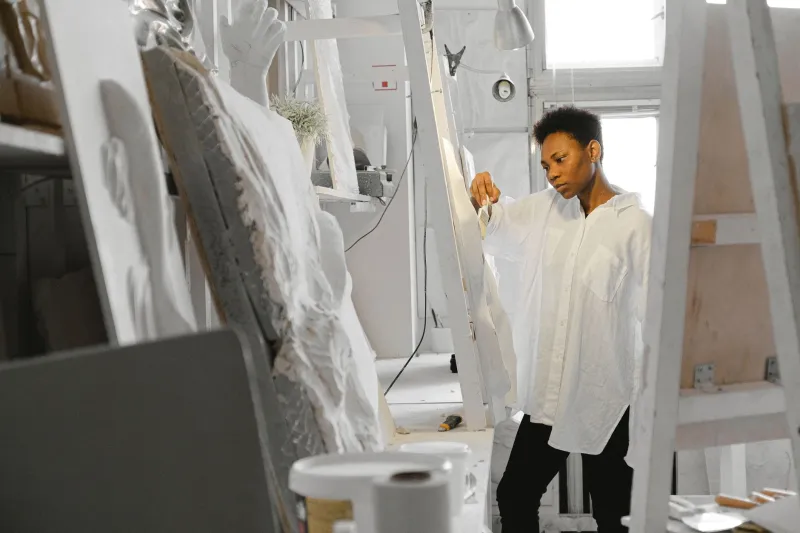
Lower the stakes on the private work. Make something you're genuinely not going to share. Not as a discipline exercise, but as a gift to yourself — a space where the work doesn't have to perform. Sketches, voice memos, bad first drafts that exist only for you. The point isn't the output; it's rebuilding your relationship with the process.
Notice the difference between resistance and emptiness. Resistance usually means something's alive — you're close to something that matters and your nervous system is trying to protect you from the vulnerability of it. Emptiness is different; it often means you've disconnected from your actual curiosity and you need to find your way back to a real question. They feel similar but they call for different responses.
Find one person who gets it. Not an audience. One person — a friend, a collaborator, someone in your corner — who you can be honest with about the work when it's unfinished and uncertain. That's not the same as performing for an audience. It's more like thinking out loud with a witness. It can provide just enough connection to keep the isolation from going toxic without turning the work back into a performance.
The Permission Was Always Yours
There's something almost unbearably simple at the bottom of all of this: the permission to make things without an audience was always yours to give yourself. Nobody can hand it to you. The applause can't authorize it retroactively. The work you made when people were watching doesn't prove you're allowed to make work when they're not.
You're allowed. You were always allowed.
The room being quiet isn't a verdict. It's just a room. And the work that comes out of that quiet — the stuff made without witnesses, without stakes, without anyone waiting on the other end — that work has a particular quality to it. You can feel it when you encounter it. Something in it wasn't made for approval. It was made because the person making it needed to find out what was there.
That's the work worth making. Even if nobody's watching. Maybe especially then.